




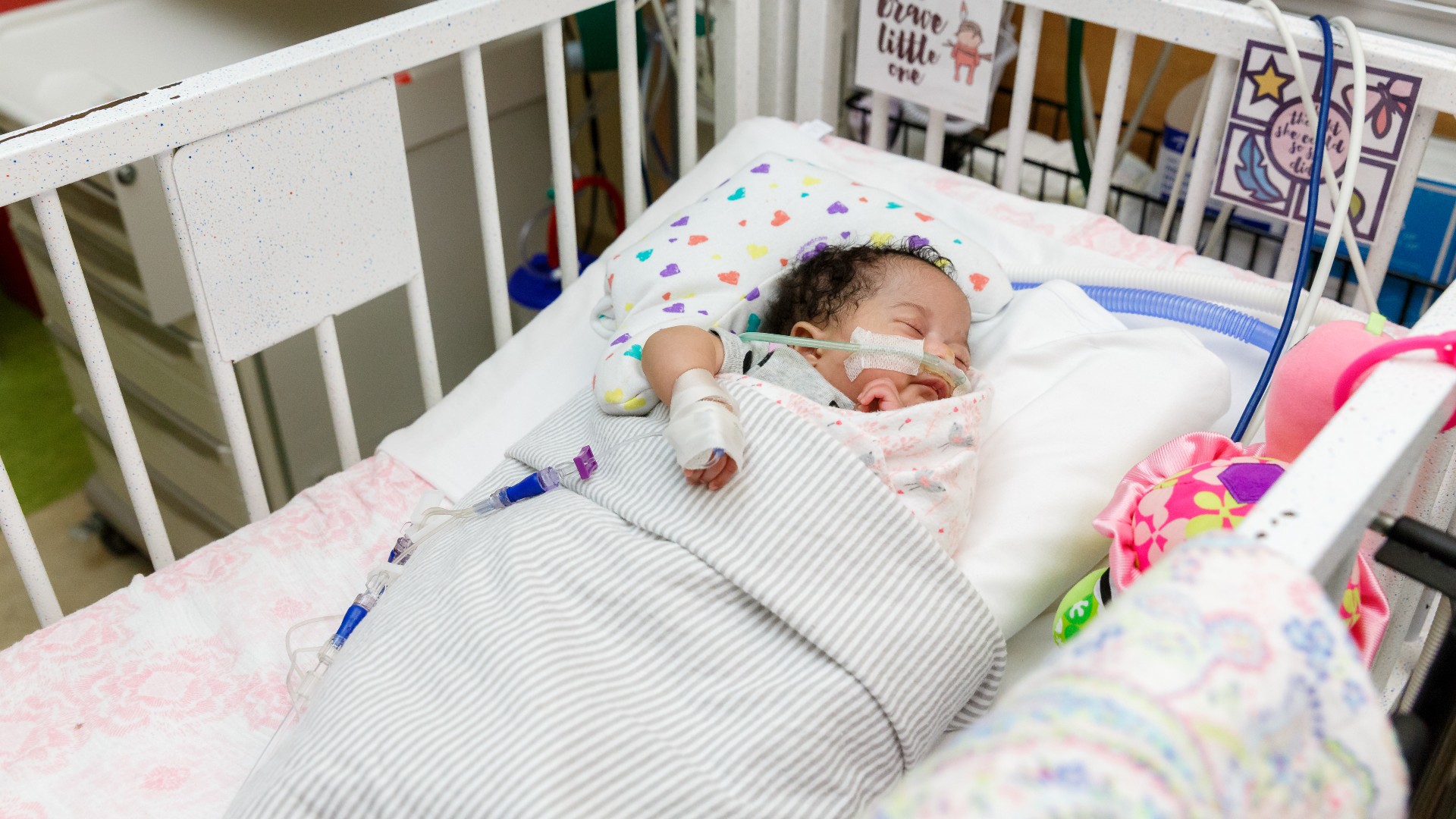
You can be with your baby in the NICU at any time. Most parents find that becoming involved with their baby's care helps bond with their baby. Once both you and your baby are ready, you will be encouraged to hold and rock him/her.
Staff in the NICU can show you how to care for your baby in many ways. Learning these aspects of care is helpful in preparing you to take your baby home.
Learn more about:
- Precautions in the NICU
- Equipment in the NICU
- Feeding your Baby in the NICU
NICU babies need to be especially protected against germs or infection and our team takes extra precautions to keep our little patients safe.
- Germ care: The staff of the NICU will give you instructions on special hand washing techniques before entering the area. Sometimes, masks are needed.
- Visiting Family: Although we allow and encourage visitation of babies by other family members, limiting visitors is a good idea. Many sick and premature babies are susceptible to infection. Siblings should be carefully checked for signs of colds or other illness and helped with hand washing before visiting their baby brother or sister.
Visitation Guidelines:
There are a lot of machines and medical equipment in the NICU. We use them to monitor and keep your baby comfortable, while supporting his/her care and growth. Understanding what the machines do can help make you more comfortable around them. Learn more about:
- Warmth and temperature regulation
- Breathing help
- Monitoring Devices
- Diagnostic machines
- Intravenous lines and tubes
Warmth and Temperature Regulation
All babies need help regulating their body temperatures. Those in the NICU may need additional support because they are small or unwell.
Once a baby is stable and can maintain his/her own body temperature without added heat, open cribs or bassinets are used. Babies are usually dressed in a gown or T-shirt, a diaper and a hat.
A baby can lose large amounts of heat through his/her head. Often, a blanket is wrapped snugly around the baby, called swaddling.
There are several ways to keep NICU babies warm and comfortable, including the following:
- Immediate drying and warming after delivery—A baby's wet skin loses heat quickly by evaporation and can lose 2 to 3°F (Immediate drying and warming can be done with warm blankets and skin-to-skin contact with the mother, or another source of warmth such as a heat lamp or over-bed warmer.)
- Open bed with radiant warmer—An open bed that has a radiant warmer above. A temperature monitor on the baby connects to the warmer to regulate the baby’s temperature. When the baby is cool, the heat increases. We also use these beds in the NICU for initial treatment and for sick babies who need constant attention and care. Babies on radiant warmer beds are usually dressed only in a diaper.
- Incubator/Isolette—Incubators are walled plastic beds with a heating system to circulate warmth. Babies are often dressed in a T-shirt and diaper.
Breathing Help
Some babies need help breathing while in the NICU. We have several machines and devices we use to monitor and help babies breathe more comfortably and get the oxygen they need, including:
- Respirator or mechanical ventilator—This machine helps babies who cannot breathe on their own or who need help taking bigger breaths. High frequency ventilators give hundreds of tiny puffs of air to help keep a baby's airways open. Ventilators can also deliver extra oxygen to the baby.
- Endotracheal tube (ET)—This tube is placed through the baby's mouth or nose and connects to a mechanical ventilator (breathing machine) with flexible tubing.
- Continuous positive airway pressure (CPAP)—Through small tubes that fit into the baby's nostrils, called nasal CPAP, this machine pushes a continuous flow of air or oxygen to the airways to help keep tiny air passages in the lungs open. CPAP may also be given through an ET tube.
- Extracorporeal membrane oxygenation (ECMO)—This is a special technique for babies with respiratory disease that is challenging to treat. With ECMO, an advanced outside machine adds more oxygen to the baby’s blood and removes carbon dioxide. ECMO was pioneered at Children’s National and our neonatologists are recognized experts. Learn more about ECMO.
Monitoring Devices
As we care for your baby, we are carefully watching all of his/her vital signs. We use several different types of machines to monitor your baby, including:
- Heart or cardiorespiratory monitor—This monitor displays a baby's heart and breathing rates and patterns on a screen. Wires from the monitor are attached to adhesive patches on the skin of the baby's chest, abdomen and leg.
- Blood pressure monitor—Blood pressure is measured using a small cuff placed around the baby's upper arm or leg. Periodically, a blood pressure monitor pumps up the cuff and measures the level of blood pressure. Some babies need continuous blood pressure monitoring. This can be done using a catheter (small tube) in one of the baby's arteries.
- Pulse oximeter—This machine measures the amount of oxygen in the baby's blood through the skin. A tiny light is taped to the baby's finger or toe, or in very tiny babies, a foot or hand. A wire connects the light to the monitor where it displays the amount of oxygen in the baby's red blood cells. “Pulse Ox” is painless and non-invasive, but helps to ensure that your baby’s heart is working properly.
Diagnostic Machines
Your doctor may want to do tests to monitor any changes in your baby’s conditions. Some of these tests include:
- Ultrasound—In the NICU, ultrasound may be used to examine the heart, abdomen and internal structures of the baby's brain. Ultrasound is painless and provides much information about a baby's health.
- X-ray—Portable X-ray machines may be brought to the baby's bedside in the NICU. X-rays are taken for many reasons, including checking the placement of catheters and other tubes, as well as to help diagnose your baby’s condition and assess progress and recovery.
- Computed tomography—CT scans are created from multiple X rays to create a detailed 3-dimensional image of a baby’s organs or bone structure, to help in diagnosis and treatment.
Intravenous Line and Tubes
Babies in the NICU usually have an IV (intravenous line) that helps us to easily give medications and fluids. A baby may need IV lines or catheters for just a short time or for many days.
There are several different types of lines that help a baby receive needed fluids and medications, including:
- Intravenous line (IV)—Babies may have an IV placed in a hand, foot or scalp, where the veins are easy to find. Tubing connects the IV to a bag containing fluids that are carefully delivered with a pump.
- Umbilical catheter—After the umbilical cord is cut at birth, newborn babies have the short stumps of the cord remaining. Because the umbilical cord stump is still connected to their blood and circulatory system, a catheter (small flexible tube) can be inserted into one of the two arteries or the vein of the umbilical cord. We can deliver medications, fluids and blood through this catheter.
- Percutaneous line—A catheter is placed in a vein or artery in the baby's arm and is used for meeting a baby's longer-term needs than an IV in the hand or scalp.
As with all care in the NICU, our staff will explain all of our choices and include you in decision making regarding the care for your baby.
When your baby is in the NICU you want to make the most of the times you have to connect and bond with your child. Feeding your newborn while he/she is in the NICU can be an important part of that bonding process.
We will support you in learning how to feed your NICU baby, whenever it is safe and medically appropriate.
Feeding Your Baby
How to feed your baby in the NICU
Sometimes, when babies are sick or premature, they are often not well enough to breastfeed or take a bottle. Babies feed by sucking and some NICU babies are not strong enough to suck effectively. Premature babies may not be physically mature enough to coordinate sucking, swallowing and breathing, or their gastrointestinal tracts may not be mature enough to digest feedings.
Special pacifiers designed for premature babies are sometimes used to teach them how to suck properly before they begin to breastfeed or bottle feed.
Here are some ways you can participate in feeding your baby:
- Intravenous (IV) fluids and hyperalimentation
- Gavage or tube feedings
- Nipple feedings
Intravenous (IV) fluids and hyperalimentation
Many babies in the NICU receive essential fluids and electrolytes through a tube in a vein called an IV. Some babies may need a special preparation called parenteral hyperalimentation, which contains nutrients they need until they are able to take milk feedings.
The contents of IV fluids and hyperalimentation are carefully calculated for each baby. We calculate the following components:
- Calories
- Protein
- Fats
- Electrolytes including sodium, potassium, chloride, magnesium and calcium
Babies need calories, protein, and fats for adequate growth and development. Fluids, electrolytes, and vitamins are necessary for functioning of body systems.
Blood tests help determine how much of each component a baby needs and the amount of each nutrient can be increased or decreased accordingly. Daily weights and keeping track of a baby's urine output also help monitor fluid needs.
Gavage or tube feedings
Premature babies, especially those younger than 32 to 34 weeks gestation, may not be able to drink from the breast or bottle. Gavage or tube feedings may be needed until the baby learns to suck effectively.
For gavage feedings, a small flexible tube is placed into a baby's nostril or mouth and passed down into the stomach. At first, tiny amounts of breast milk or formula are given through the feeding tube. Larger babies are able to gradually take larger amounts at each feeding.
Nipple feedings
Feeding from breast or bottle can begin as soon as babies are ready and are able to suck effectively. Your baby may begin nipple feedings while still being tube fed. Sometimes a baby is able to nipple feed, but not strong enough to obtain all his/her nutrition this way. As your baby increases the amount he/she can take by nipple, the amount in the tube feedings can be decreased.
Monitoring your baby's electrolyte and blood levels
Some babies have too much or too little of certain electrolytes or other components in the blood. As a result, some of the common problems include the following:
- Hypernatremia — high amounts of sodium (salt) in the blood
- Hyperkalemia — high amounts of potassium in the blood; can be diagnosed by blood test or by changes in the baby's heart rate pattern
- Hyperglycemia — high amounts of glucose (sugar) in the blood; diagnosed by blood tests, often done by heel stick; some babies may need insulin to control high glucose levels
- Hypoglycemia — low blood sugar; usually treated with IV fluids containing dextrose (another form of sugar)
- Hypocalcemia — low calcium levels in the blood; usually treated with calcium in IV fluids
About Breast Milk
How will we know when our baby is ready for milk?
Once your baby's condition is stable, including blood pressure and temperature, readiness for milk feedings is checked. Sick babies may not be strong enough to suck effectively. Premature babies may not be physically mature enough to coordinate sucking, swallowing and breathing, or they may be too weak to suck for long periods of time. Special pacifiers designed for premature babies are sometimes used to teach them how to suck properly before they begin to breastfeed or bottle feed.
Most babies older than 28 weeks gestation have digestive tracts mature enough for milk feedings. Once your baby is taking milk feedings well and is gaining weight, intravenous (IV) fluids and hyperalimentation can be decreased.
Your doctor will look for signs your baby is ready including having:
- Already passed a bowel movement (or meconium, which is the first stool immediately after birth)
- Active bowel signs
- Any and all gastrointestinal problems resolved
The benefits of breast milk
A mother's breast milk is the preferred milk for all babies, even the most premature babies. Breast milk contains all the nutrients needed for growth and development. Although commercial milk formulas are designed to be close to breast milk, most are based on cow's milk. The fats in breast milk are more easily digested. Formula is digested more slowly than breast milk and may not be as well tolerated. In addition, breast milk contains antibodies from the mother to help protect babies from infection, something commercial formulas do not have. This protection is especially important when babies are sick or premature and may have higher chances of developing an infection.
Very premature babies may need human milk fortifiers added to breast milk to meet their increased needs for protein, calcium and phosphorus. Even if your baby cannot breastfeed, you can pump your breast milk and it can be stored for gavage or nipple feedings. Depending on the amount of milk needed for feedings, formula may need to be added to breast milk.
Certified lactation consultants (IBCLC) are nurses or other healthcare providers who are specially trained to help women with breastfeeding. In Children’s NICU, these professionals can instruct you in the proper techniques for nursing your baby. They can also teach you about pumping and storing your breast milk for your baby.
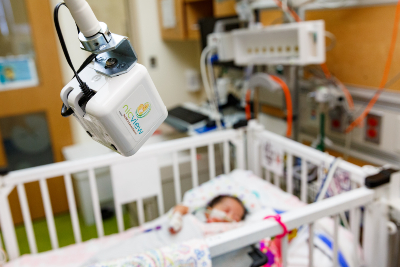 The NicView™ camera system is located near your baby’s crib or isolette and allows you to see your baby in real time through a secure online web portal. NicView™ may help you feel more connected to your baby when you cannot be in the NICU. The NicView™ camera is medical equipment and only to be operated by the NICU staff.
There will be times when you log in to see your baby and:
- Your baby is crying, has spit up or had a wet burp
- Your baby’s hat has moved or lost their pacifier
- Eye patches have slipped or phototherapy is turned off
- You can’t see your baby because he/she is in the swing or receiving care
The care your baby is receiving from the medical team doesn’t change with the camera and is the same as if you were at the bedside. We ask for your patience when viewing your baby remotely. Your baby is safe and your nurse who is also taking care of other babies will tend to your baby as soon as possible.
What will I see?
Once you are logged in, you will start receiving live streaming images of your baby. If the medical team is caring for your baby or your baby is in the swing the camera will be “off-line” during those times and you will see an “off-line” message. Your nurse may leave you a message about your baby and when you log in you will be able to see these messages.
How do I access NicView™?
You will first need to sign a consent form to use the NicView™ camera system. You will then be provided with a print out with your unique log in. If you share your log in with your family and friends, make sure that they will not share this without your permission. Of note, no parents/guardians, family members or friends should be taking screenshots or video of the live stream.
You may see your baby from a laptop, smartphone or tablet. To access images (pictures) of your baby, go to the NicView™ website and enter your unique log in to connect. The first time you or a family member logs in from a new computer, tablet or smart phone, you may be asked to accept a one-time consent.
Is NicView™ secure?
NicView™ produces an image that travels securely using the current internet standard. NicView™ cameras do not transmit sound and do not record video. No other persons will have access to your baby’s image unless you have provided them with your log in information.
Who can I call for troubleshooting help?
If your camera needs adjusting, you can't see your baby, have trouble logging in or have other technical problems, the NicView™ team is here to help. You should call NicView™ technical service at 1-855-NIC-VIEW, 1-855-642-8439, the number that located on the bottom of your viewing screen.
NicView™ provides technical support 24/7 for problems related to the cameras and not the Children’s National NICU or your nurse. If you have any medical concerns about your baby, call the Children’s NICU at 202-476-5040 to speak with your nurse.
Additional Support Information
Children’s offers several programs to help you while your baby is in the NICU.
Learn more about:
- Social Work
- Chaplaincy Services
- Child Life and Integrative Care Services
- NICU Postpartum Support Program
Please ask us any question or voice any concern. Our staff knows that the more confident you feel, the better it will be for your baby and your entire family.