





Tetralogy of Fallot Surgical Outcomes
Congenital heart disease (CHD) is the most common birth defect, with nearly 1% of affected newborns experiencing moderate to severe cases of CHD.
Tetralogy of Fallot is a common type of CHD that has four major features:
- A hole between two chambers of the heart (ventricular septal defect or VSD)
- Obstruction of blood flow to the lungs (right ventricular outflow tract obstruction or RVOTO)
- A misplaced aorta that sits on top of the VSD (an overriding aorta)
- Thickening of the right pumping chamber of the heart (ventricular hypertrophy)
Long-Term Survival Outcomes After Tetralogy of Fallot Surgery
Thanks to years of effort by researchers and cardiac surgeons, modern surgical techniques to repair Tetralogy of Fallot have significantly advanced in recent decades. Long-term survival rates for people who have received an operation to repair Tetralogy of Fallot have been reported as between 70% - 90%.
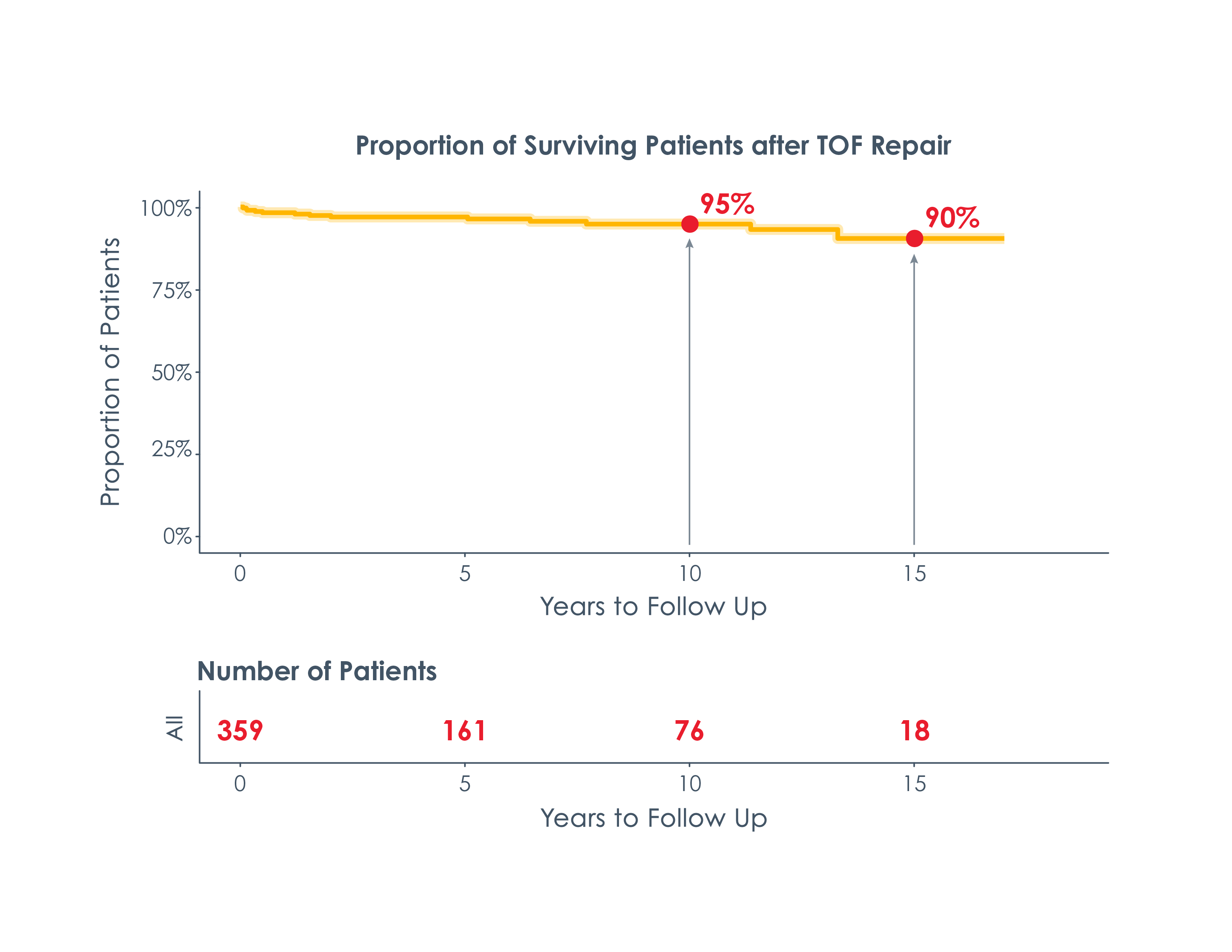
This graph shows an estimated rate of 95% survival at 10 years and 90% at 15 years after Tetralogy of Fallot repair. The arrows on the graph show these points.
Risk of Reoperation for Tetralogy of Fallot
While 30-year survival rates for Tetralogy of Fallot are quite strong, there is considerable risk that more surgeries (reoperations) will be needed later in life.
Indications for reoperation in individuals who were born with Tetralogy of Fallot include:
- A blockage in the pathway leading from the right pumping chamber of the heart to the lungs (right ventricular outflow tract obstruction).
- A narrowing of the blood vessel that carries blood from the right side of the heart to the lungs (pulmonary stenosis).
- An increase in the size of the right pumping chamber of the heart (right ventricle dilation).
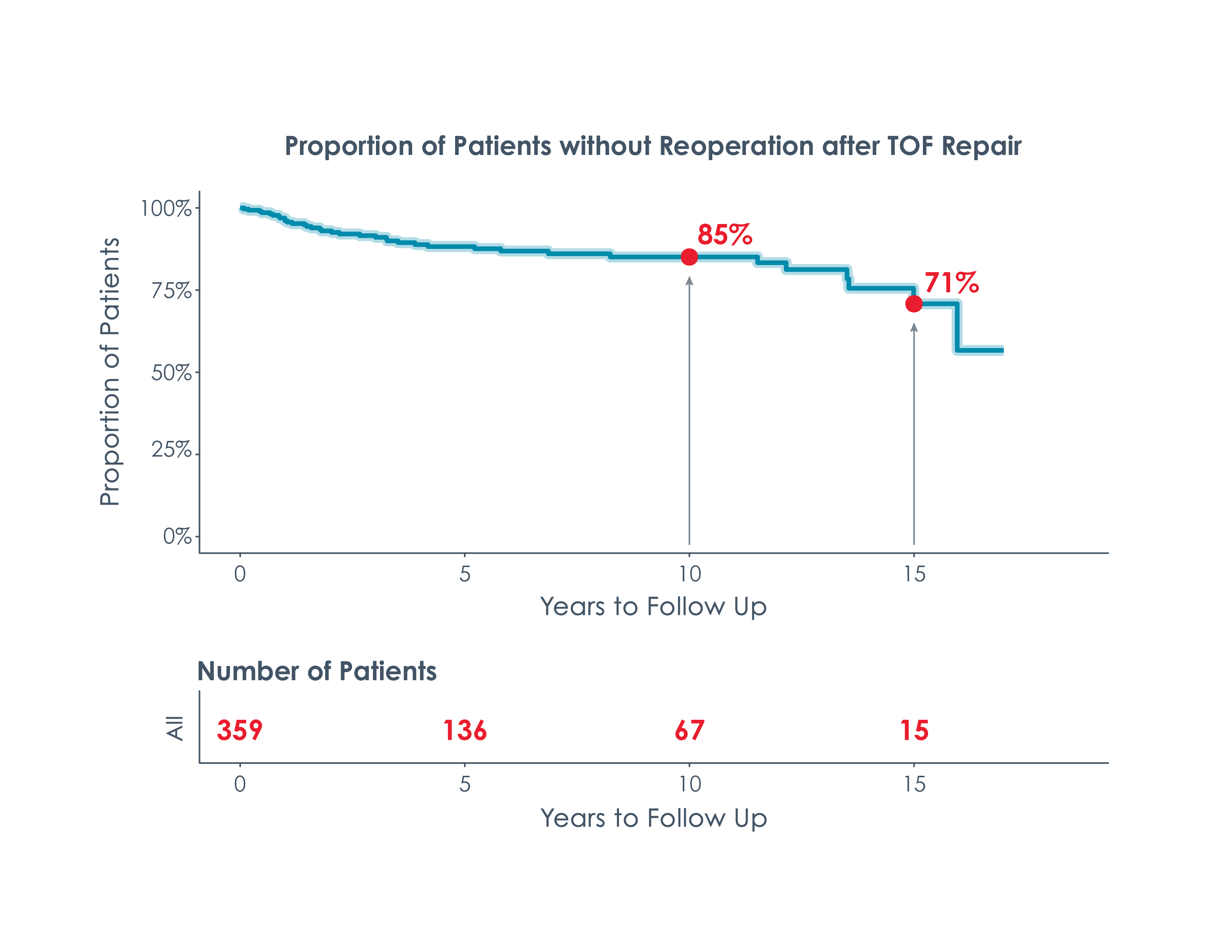
This graph shows how likely it is to need any type of reoperation after a Tetralogy of Fallot repair.
The arrows at different points show that:
- An estimated 85% of patients will not need a reoperation 10 years after their repair
- An estimated 71% of patients will not need reoperation 15 years after repair
Risk of Cardiac Catheterization for Tetralogy of Fallot
While long term survival rates for Tetralogy of Fallot are quite strong, many people who had Tetralogy of Fallot repair will still need a catheter-based procedure (re-intervention) later in life.
Indications for a catheter re-intervention in those born with Tetralogy of Fallot include:
- Right ventricular outflow tract obstruction
- Right ventricle dilation
- Pulmonary stenosis
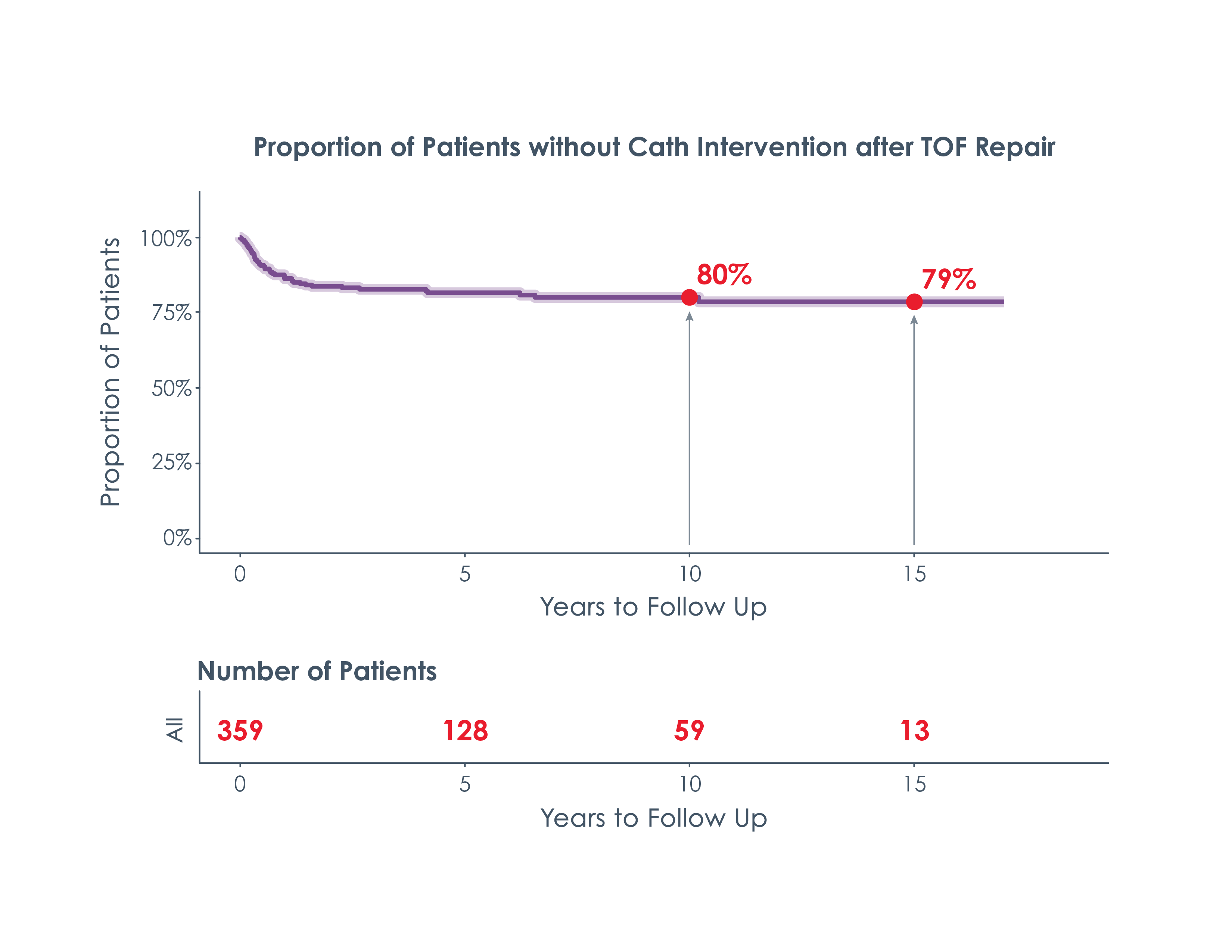
This graph shows how likely it is that someone who had a Tetralogy of Fallot repair will need a re-intervention.
The arrows at different points indicate that:
- An estimated 80% of patients will not need a reintervention 10 years after repair
- An estimated 79% of patients will not need a reintervention 15 years after repair
Risk of Pulmonary Valve Replacement
A key feature of Tetralogy of Fallot is the blockage of the pulmonary artery, which is the vessel that takes blood from the right side of the heart to the lungs. During the operation to repair Tetralogy of Fallot, work is often done on the pulmonary artery pathway and the valve that is between the pulmonary artery and the heart, called the pulmonary valve.
There is evidence that for people who had Tetralogy of Fallot repair, this valve will eventually degrade and leak in up to 50% of people, requiring a replacement of the pulmonary artery valve by the time they are 25 years old.
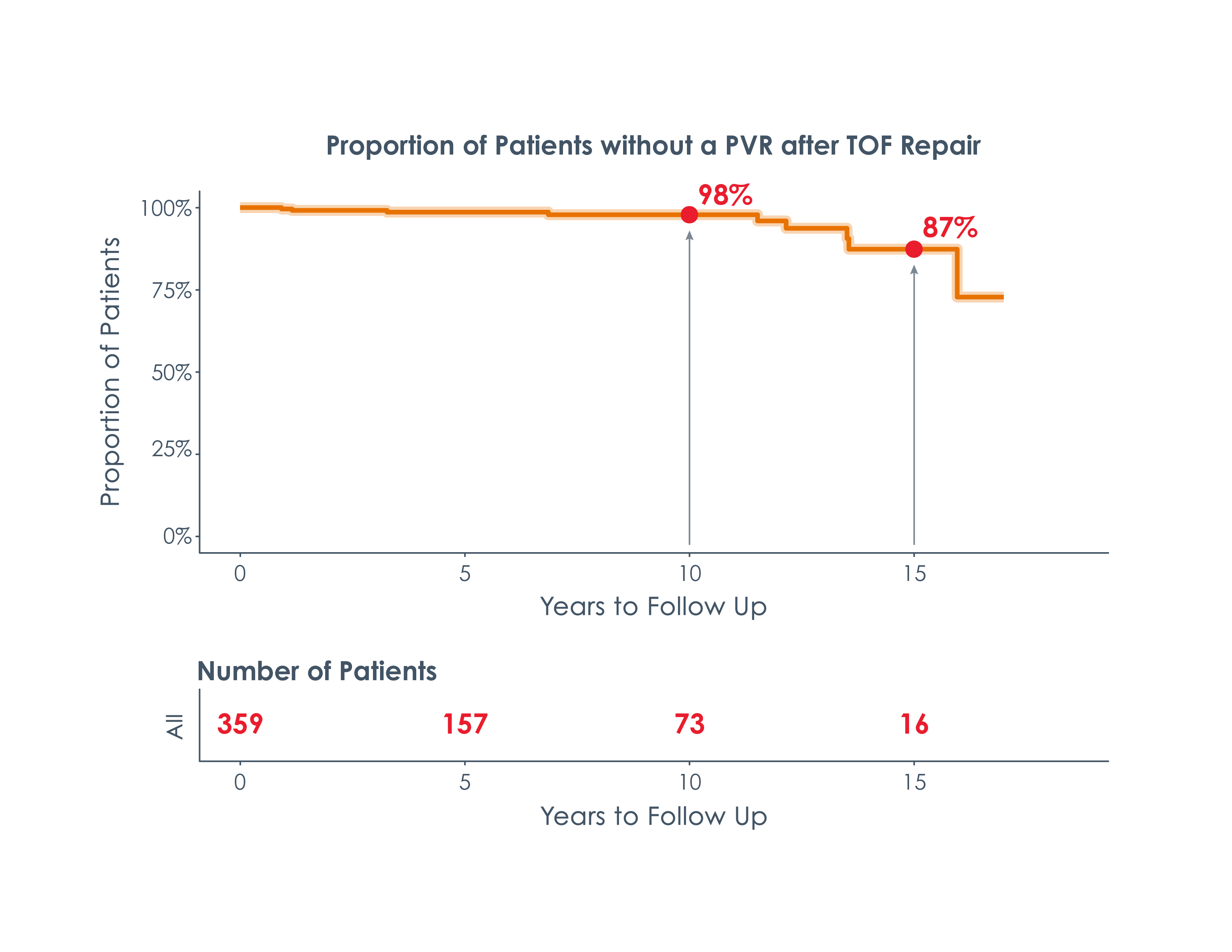
This graph shows how likely someone who had surgical repair of Tetralogy of Fallot at Children’s National will need a pulmonary valve replacement (PVR).
The arrows at different points on the graph show that:
- An estimated 98% of people who had a Tetralogy of Fallot repair will not need a replacement of their pulmonary valve 10 years after repair
- An estimated 87% of people will not need a valve replacement 15 years after repair
Cardiology follow-up visits can help Children's National identify if – and when – surgery is needed again for later-in-life complications of Tetralogy of Fallot.
How to Read and Interpret These Numbers
These graphs are called Kaplan Meier curves. They are produced using our own cardiac surgery data that is stored in the CNCORe database. The goal of these graphs is to predict what may happen 10 to 15 years after a child's initial heart surgery. We collect data and information for every single patient we have operated on. Over time, however, some people stop seeing their doctor or move to different states and countries—meaning that researchers do not have complete information for every patient across the years.
The CNCORe data is used to create graphs that estimate risk for something like reoperation using the data we do have, without needing every data point for every single patient.
Understanding the Line Graphs
Cardiac Surgery Long-Term Outcome Graphs
For each heart condition below, you can view data about the risks of surgical procedures and the chances of a child needing additional operations over time.